Quick answer
“Spending money after bills are covered” means the cash that’s actually available once you subtract near‑term obligations from your usable balance. Instead of looking at a large bank‑account number, you estimate: *usable cash − upcoming bills − protected savings − already‑committed spending = what’s safe to consider for today.* This number helps you decide whether you can grab lunch out, fill the tank with less worry, or wait a day before purchasing something extra. Treat it as a short-term decision-support estimate, not financial advice.

How to estimate it
Start with your *usable cash*, typically the checking‑account balance you see this morning, not some theoretical “total money” that includes restricted savings or investment accounts. Write down every bill and automatic payment that will hit your account in the next 7 to 14 days, including subscription renewals, loan payments, and any manual transfer you’ve committed to (like a rent split).
Next, set aside a *protected savings cushion*: a number you’ve decided to keep untouched for emergencies or your next‑paycheck buffer. Then subtract *already‑committed spending*: debit‑card holds that haven’t posted, checks you’ve written but aren’t yet cashed, and planned grocery or fuel amounts you know you’ll need before the next inflow. What’s left is a rough “available for today” estimate.
The underlying formula works like this: *Estimated spendable today = usable cash − near‑term bills − protected savings − already‑committed card/debit spending − other known obligations.* You can keep this updated on a scratchpad or let a tool do the arithmetic for you so you only have to glance at one number each morning.
What can make this estimate wrong
Even the best‑intentioned estimate is a snapshot, not a guarantee. A delayed transaction, like a restaurant tip that posts two days after the meal, can quietly eat into today’s number. Refunds that appear mid‑week might temporarily inflate your balance. Unexpected bills, such as a medical copay or a forgotten subscription, can turn a comfortable “leftover” into a tight spot.
Manual estimates also rely on your memory. If you forget a scheduled payment that’s just outside your weekly window, or you miscalculate the exact amount of a variable bill like a credit‑card statement, the final number drifts. And because people naturally overestimate how much buffer they really have, the same raw bank balance can feel generous one day and dangerously thin the next.
How Pip handles it
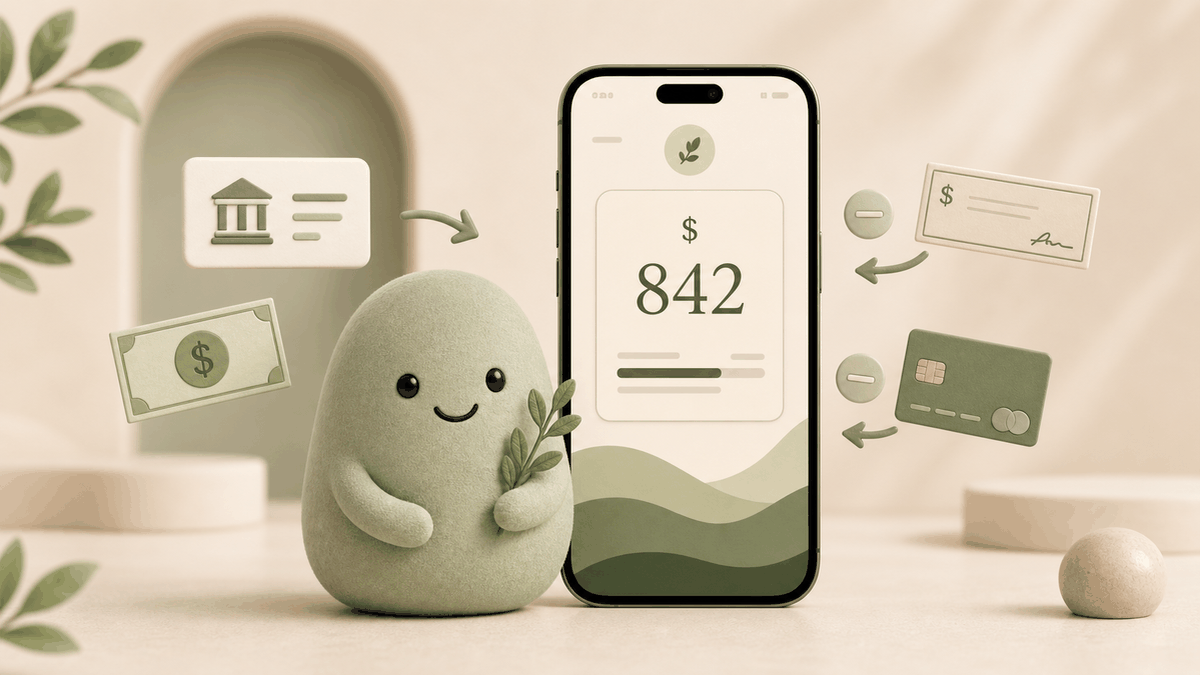
Pip connects to your checking and savings accounts with read‑only access. It does not move money and does not store bank usernames or passwords. Every day, Pip reads your latest balances and recent transactions, then automatically identifies upcoming bills, recurring payments, and pending debit activity. It subtracts those near‑term obligations and a savings cushion you set, then divides the remaining cash across the days until your next expected inflow.
The result is a single daily number: Spendable Cash Today. You see one decision‑support signal that tells you what’s available for today, without having to build a budget, tag expenses, or memorize due dates. Pip is not financial advice; it’s a companion that makes the mental math of “what’s actually left after bills” quick and low‑pressure. If a surprise payment hits or your bank connection misses a transaction, the number adjusts the next morning so you’re always working with a fresh estimate.
FAQ
Does my whole bank balance become spendable after bills?
No. Even after scheduled bills are subtracted, you still need to hold back money for savings cushions, upcoming auto‑debits, credit‑card payments, and pending transactions that haven’t posted yet. A true spending number only counts cash that’s free of all near‑term obligations.
What if I get an unexpected bill mid‑week?
Any estimate you make today is only as good as the information you have. A surprise expense, like a car repair, a doctor’s copay, or a subscription you forgot to cancel, will change what’s actually available. This is why checking a fresh number each day is safer than relying on a once‑a‑month picture.
How does Pip know about bills I haven’t paid yet?
Pip reads your connected checking and savings accounts and looks for recurring payments, upcoming debits, and known near‑term obligations. It doesn’t access your utility‑company portal or guess about future purchases; it works with the transaction history and scheduled‑payment signals available through your bank’s secure data feed.
Is the leftover money completely free to spend?
Not necessarily. The leftover amount after fixed commitments is a short‑term signal, not a full financial‑health diagnosis. It doesn’t account for long‑term retirement goals, emergency‑fund targets, or discretionary needs weeks out. Think of it as a decision‑support number for today, not a permission slip to ignore tomorrow.
Source notes
Pip uses a read-only account connection, does not move money, does not store bank usernames or passwords, and is not financial advice. The “spendable after bills” concept appears widely in personal‑finance conversations, from the 50/30/20 rule to zero‑based budgeting. This article adapts that everyday question into Pip’s Spendable Cash Today model, which uses read‑only bank data and a daily‑fallback calculation. No proprietary financial model is included; the estimate is a practical, no‑advice decision‑support tool built for people who want a simpler daily check‑in.