Quick answer
Pip is a budgeting app alternative for people who do not want to manage a full budget every day.
A traditional budgeting app usually asks you to sort spending into categories, set monthly limits, review charts, and keep the system tidy. That can be useful, but it can also become another chore. Pip is narrower. It helps answer one practical question before you spend:
What room do I have today?
Pip centers that answer around Spendable Cash Today. Instead of treating your bank balance as the number you can spend, Pip looks at money that needs to be protected for bills, near-term obligations, and the normal timing gaps that make a checking account feel misleading.
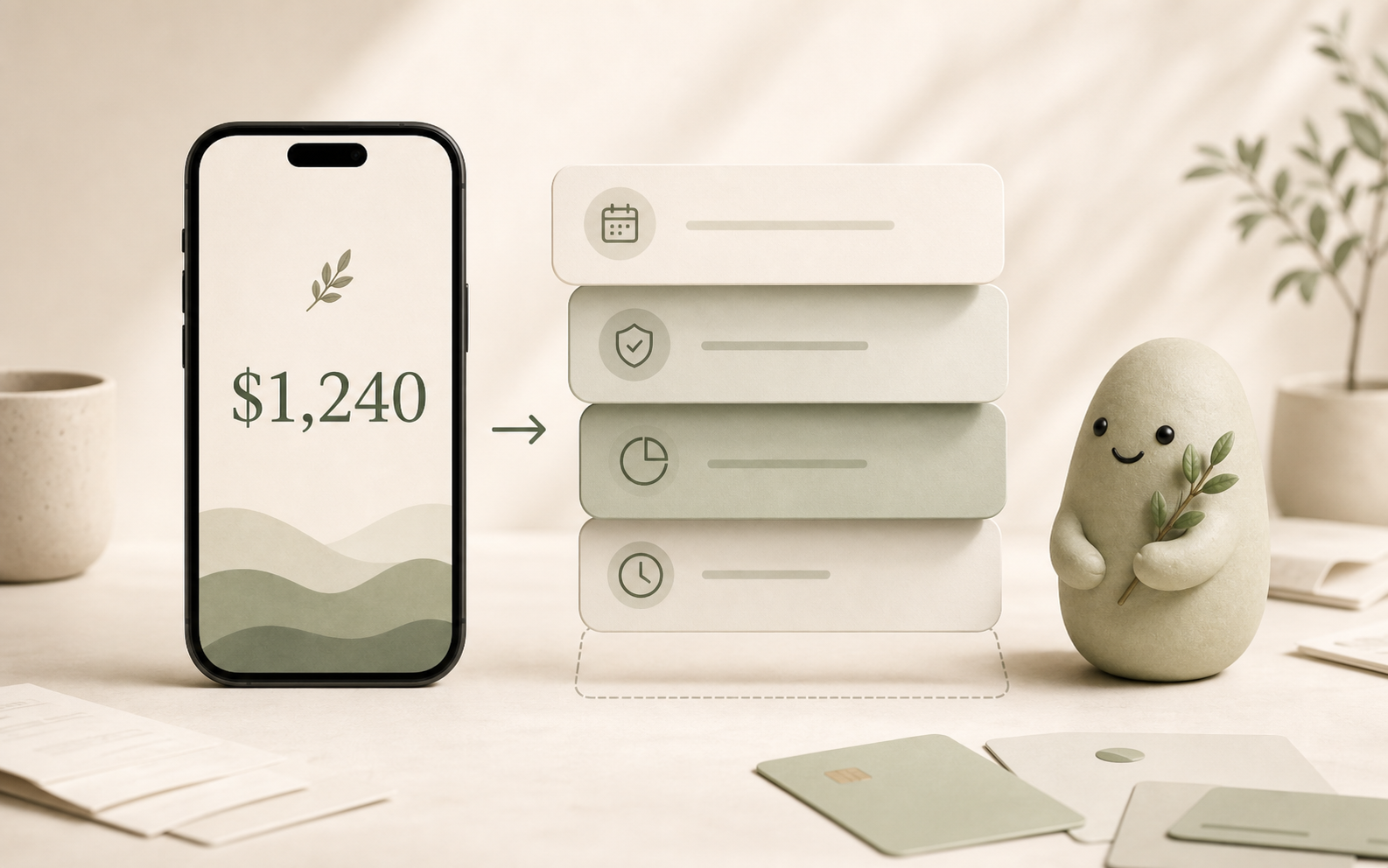
The goal is not to shame spending or build a perfect financial plan. The goal is to make the next decision calmer. If your bank says you have $1,240, that number may include rent, subscriptions, groceries, gas, and money you already mentally promised to something else. Pip helps turn that vague balance into a more useful daily number.
Pip uses a read-only connection. It does not move money, and it does not store bank usernames or passwords. Pip is also not financial advice. It is a practical spending companion, not a financial planner, lender, investment tool, or replacement for judgment.
Realistic dollar example
Here is a simple example of why a raw bank balance can feel too optimistic.
This does not mean you are broke in a dramatic way. It means the bank balance alone is not telling the whole story.
A budgeting app might show that you are over or under in several categories. Pip tries to make the immediate decision simpler: if Spendable Cash Today is $0, this is probably not the day to casually spend $38 on takeout without changing something else.
What Pip does differently
Pip is not trying to be a full personal finance dashboard. It is built around a smaller daily habit: check the number before spending.
That difference matters. Many people do not fail at budgeting because they cannot understand categories. They fail because the system requires too much upkeep. A budget can be accurate on the first day of the month and still feel useless on the seventeenth, when bills are pending, income timing is uneven, and several small purchases have blurred together.
Instead of asking, "How did my restaurant category perform this month?" Pip asks, "Given what is coming up, does this spending decision still fit today?"
Some people love category budgeting, and for them a detailed budget may be the right tool. Pip is for the person who wants less daily administration and more immediate clarity.
Pip also avoids the false comfort of a single raw balance. A checking account balance is real, but it is incomplete. Some of that money may already be spoken for. Pip's job is to make that visible in plain language.
When this helps
Pip can be useful if payday timing makes your money feel uneven. You may have enough income across the month, but still feel uncertain in the days before the next deposit. Spendable Cash Today gives you a way to handle that gap without checking five mental notes at once.
It can also help if you are tired of maintaining a budget that keeps falling out of date. A detailed budget only works if it stays current. Pip is designed for a lighter habit: open it, read the daily number, and decide with more context.
Pip is especially practical when the question is simple: "Can I spend this today and still be okay?"
What Pip will not do
Pip will not create a perfect financial life for you. It will not guarantee that every bill is handled, every goal is funded, or every transaction is categorized exactly the way you would do it manually.
Pip will not move money for you. It does not move money between accounts, pay bills, or initiate transfers. The connection is designed to be read-only.
Pip will not ask for or keep your bank login details. It does not store bank usernames or passwords.
Pip will not replace professional guidance. Pip is not financial advice, and it should not be treated as tax, legal, investment, credit, or retirement planning advice.
Pip also may not be the right fit if you want a highly detailed envelope budget, advanced reports, net worth tracking, investment analysis, or business accounting. Those are valid needs, but they are not the center of Pip.
The center of Pip is much simpler: before spending, check Spendable Cash Today.
FAQ
Is Pip a budgeting app?
Pip overlaps with budgeting apps, but it is more focused. It is a budgeting app alternative for people who want a practical daily spending number instead of a full category-management system.
What is Spendable Cash Today?
Spendable Cash Today is Pip's daily answer to how much money appears available after accounting for near-term obligations and practical constraints. It is meant to be more useful than a raw bank balance when you are deciding whether to spend.
Why not just look at my bank balance?
Your bank balance can include money that is already needed for rent, bills, groceries, gas, or other upcoming expenses. Pip helps separate "money in the account" from "today's spending room."
Does Pip move money?
No. Pip does not move money. It is meant to help you understand spending room, not control your accounts.
Does Pip store bank usernames or passwords?
No. Pip does not store bank usernames or passwords.
Is Pip financial advice?
No. Pip is not financial advice. It is a spending clarity tool. You are still responsible for your financial decisions.
Source notes
This article uses plain-language product framing for Pip: a practical alternative to dashboard-heavy budgeting apps, centered on Spendable Cash Today.
The trust language is intentional: Pip is read-only, does not move money, does not store bank usernames or passwords, and is not financial advice.
The dollar example is illustrative, not a promise about how every user's finances will look. Real results depend on account activity, income timing, bills, recurring expenses, and the information available to Pip.