Quick answer
Your bank balance often includes money already spoken for by upcoming bills, pending transactions, or protected savings. To find what’s available for today, take your usable checking cash and subtract near-term obligations you know about. That gives a clear daily number you can act on, without risking tomorrow’s rent. Pip calculates this automatically so you get a fresh, single number each morning, no spreadsheets required.
How to estimate it
The core formula is straightforward:
- Start with your usable cash - the balance in your checking account that isn’t held as pending (some banks show an “available balance” that already excludes pending holds).
- Subtract near-term bills you know will hit within the next few days - rent, utilities, loan payments, subscription renewals - even if the exact debit date varies.
- Subtract protected savings - money you’ve mentally or physically set aside for an emergency fund, a sinking fund, or a savings goal that shouldn’t be touched today.
- Subtract already-committed card/debit spending - pending transactions that haven’t cleared, upcoming credit card payments you’ve scheduled, and known upcoming charges (like a recurring gym membership).
- Subtract any other known obligations - checks you’ve written, money you owe a friend, or a bill you plan to pay manually this week.
If you do this by hand, check your bank’s transactions list for upcoming and pending items, look at your calendar for due dates, and review any automatic transfers. It takes a few minutes each day. Over a week, patterns emerge, and you’ll get a feel for how much wiggle room you really have. However, manually tracking every obligation each day is easy to forget. Automating the process can help keep the habit consistent.
What can make this estimate wrong
Even a careful estimate has blind spots:
- Forgotten or unexpected bills - a quarterly insurance premium, a medical bill, or a subscription you forgot about can suddenly reduce available cash.
- Delayed transactions - debit card holds, refunds that haven’t posted, or checks that haven’t been deposited yet create a gap between what your bank shows and real-time spending.
- Variable expenses - groceries, dining, or fuel aren’t fixed; they can drift higher than you assumed.
- Stale account data - if your bank connection hasn’t refreshed or a transaction hasn’t synced, the number you see is out of date.
- Unlinked accounts - money in a savings or joint account you didn’t include might make you think you have less, or more, than you really do.
No number can predict every surprise. Treat the estimate as a decision-support guide, not a guarantee. Pip is read-only, does not move money, and does not provide financial advice, so it can’t protect you from overspending if you ignore the signals it’s built to surface.
How Pip handles it
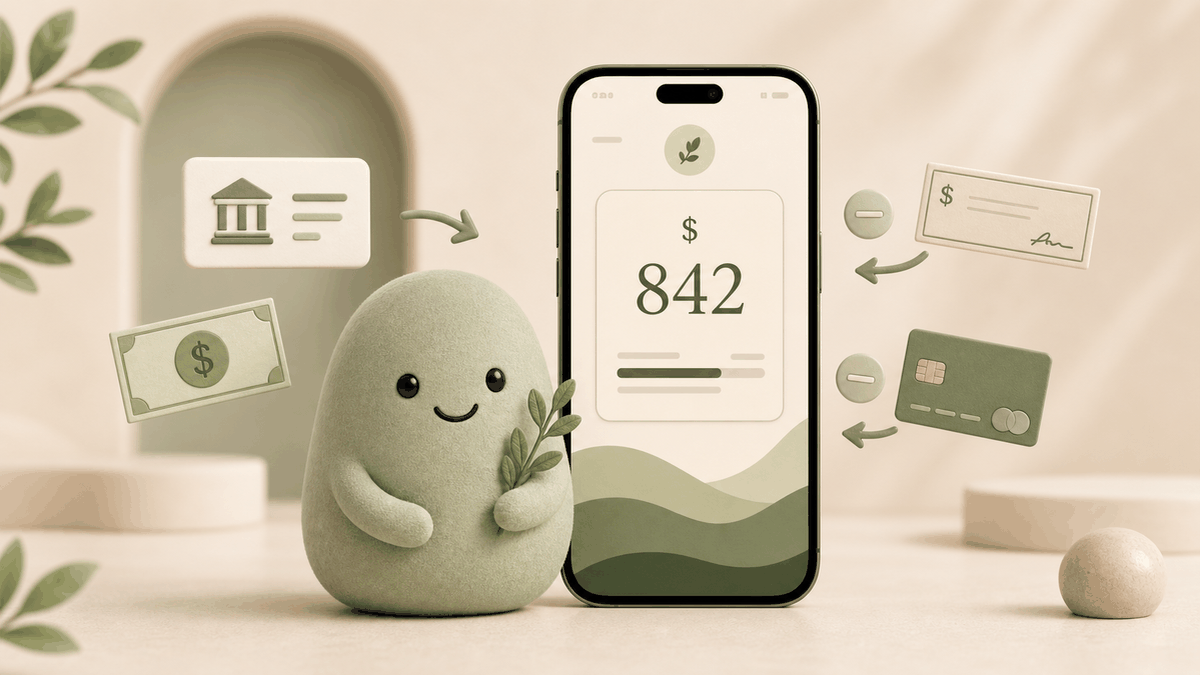
Pip was built to remove the manual work from that daily math. You connect your main spending account through a secure, read-only link. Pip does not store bank usernames or passwords and cannot move money. Over the first few days, Pip learns the rhythm of your recurring income, bills, and subscriptions. It then calculates a single number: Spendable Cash Today.
That number isn’t a budget category, and it’s not the same as your bank balance. It’s an estimate of what’s available for today after subtracting:
- upcoming bills it has already detected,
- a Monthly Savings amount you chose to protect,
- and pending card transactions that will post soon.
Because Pip is read-only and updates daily, you get a fresh, low-pressure signal each morning. It’s not financial advice, just a companion that helps you answer “what can I spend today?” without a spreadsheet. When you see a number that feels too low, it’s a prompt to peek at what’s coming up, not a rule you must obey. That shift makes checking your money feel lighter and more supportive.
FAQ
Why shouldn’t I just check my bank balance?
Your bank balance shows the total cash in your account, including money already set aside for bills, pending charges, and savings goals. That makes it easy to accidentally spend funds that are needed for a payment due tomorrow. A number that subtracts those obligations first gives you a truer picture of what’s available for today. (See Why your bank balance is misleading.)
What’s the difference between Spendable Cash Today and a budget?
A traditional budget asks you to assign every dollar to a category in advance—groceries, eating out, rent, etc. Spendable Cash Today is a single, dynamic number that reflects real-time obligations and leftover spending room. It doesn’t require you to track categories or plan ahead, so you can use it as a flexible guide rather than a rigid plan.
How does Pip know about my upcoming bills?
Pip learns by observing patterns in your connected checking account. When it sees a recurring transaction—like a monthly rent payment or a subscription—it can anticipate the next instance. It also factors in any pending card transactions and the protected Monthly Savings amount you set. However, it may not detect a brand-new bill until after the first occurrence, so it’s wise to keep a rough mental note of irregular obligations.
Can Pip’s number change during the day?
Yes. As new transactions post and pending charges clear, your Spendable Cash Today can shift. Pip refreshes daily, but if you’ve just made a large purchase or a bill hit overnight, the number you see in the morning may differ from the night before. The change is simply the math updating to reflect the latest data—nothing to fear.
Source notes
- Pip uses a read-only account connection, does not move money, does not store bank usernames or passwords, and is not financial advice. This article draws on Pip’s product design principles and internal research into how people make everyday spending decisions. The Spendable Cash Today methodology is a behavioral finance tool, not a financial advisory service. Pip does not provide financial advice. Last updated to reflect Pip’s product as of June 2025; the algorithm may improve over time, so always refer to the app for the most current experience.