Quick answer
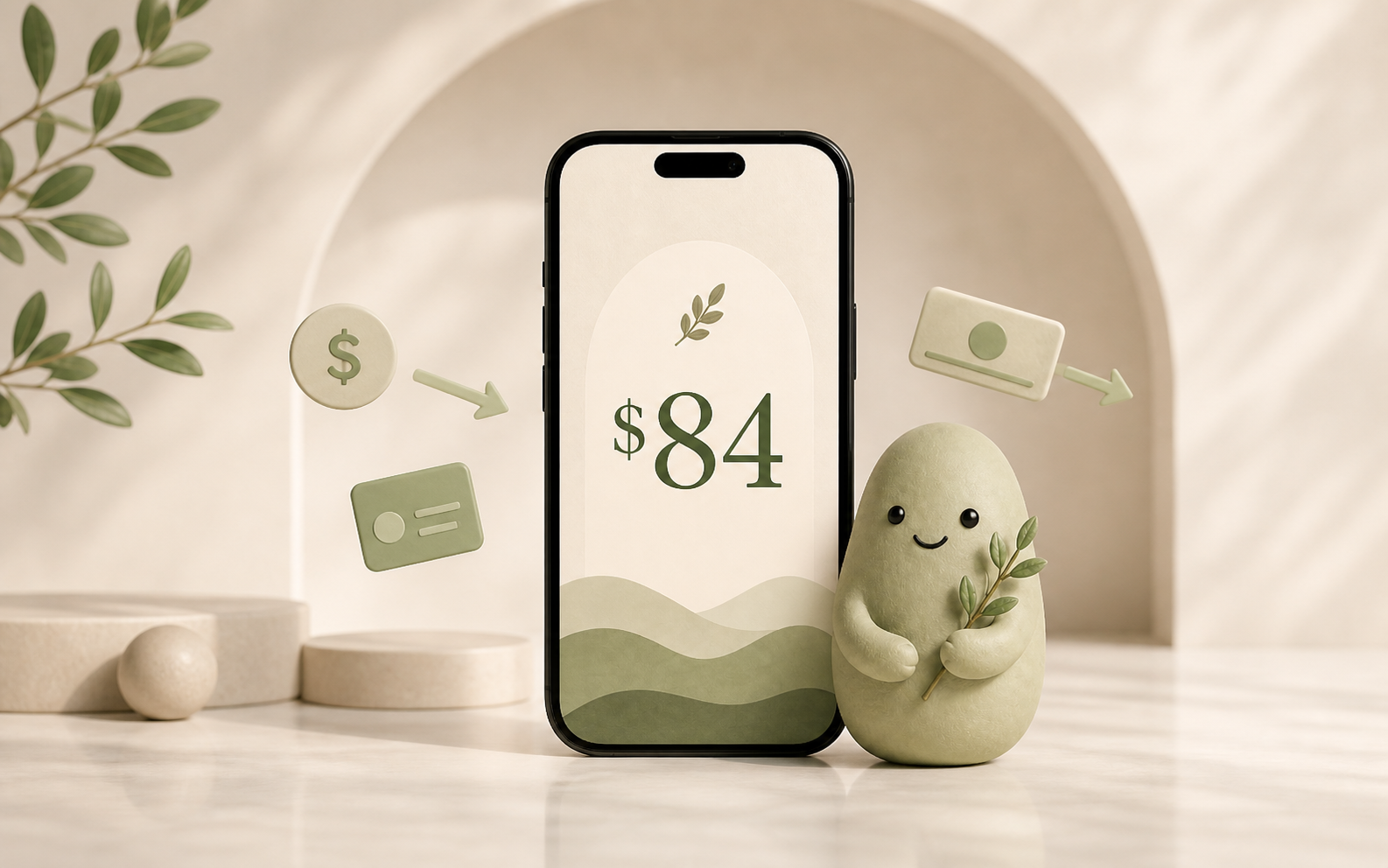
A daily spending habit is a low-pressure ritual: you check one simple number each morning to see how much you can comfortably spend today. Instead of tracking every purchase, you rely on a single, adjusted amount that accounts for upcoming bills, protected savings, and recent transactions. Pip turns this into a 5‑second habit by showing your Spendable Cash Today—a daily signal that helps you spend less without feeling like you’re on a budget.
Money example
How to estimate it
The formula that drives a reliable daily number is straightforward. It starts with what you truly have available and strips away the commitments that will come due soon.
Estimated spendable today = usable cash – near-term bills – protected savings – already-committed card/debit spending – other known obligations
- Usable cash: What you have in checking right now.
- Near-term bills: Rent, subscriptions, loans due before your next paycheck.
- Protected savings: A Monthly Savings target you set aside so you don't spend money you'll need later.
- Already-committed spending: Pending card transactions or checks that haven't cleared yet.
- Other obligations: Irregular costs, like a planned transfer.
That final number is your safe spending ceiling for the day. Pip reads transactions from your connected accounts to fill in each part, then recalculates Spendable Cash Today after each sync. The result isn't a perfect forecast. It's a number that keeps you aware without constant manual tracking. See exactly how How the number works refines this approach.
What can make this estimate wrong
Your daily spending number is only as reliable as the data Pip can see. A few things can cause it to drift from reality:
- Connected account gaps: If you haven’t linked a credit card or savings account, Pip won’t include those transactions or balances. The number may then overestimate what you can safely spend.
- Delayed imports: Some banks take hours to a day to show cleared charges. Pending transactions might not update right away, so yesterday's spending may not appear yet.
- Unexpected bills: A surprise medical bill or a forgotten subscription can throw off the remaining spendable amount, especially if it clears before your next paycheck.
- Manual cash spending: ATM withdrawals show as a drop in cash, but Pip can’t see what you bought with that cash, so the daily figure doesn't reflect those purchases.
- User-set targets: Your Monthly Savings goal is self‑defined. If you set it too low, the daily number may feel more generous than is safe.
None of this makes the habit useless. It just means you should treat the number as a guide, not a receipt. If you notice a sudden swing, it’s a prompt to check your transactions, not a reason to panic. That’s the kind of easy awareness a daily spending habit is meant to create.
How Pip handles it
Pip connects to your bank through a read-only link, so it can view balances and transactions but cannot move money. This keeps your money safe while giving Pip the data it needs. Your credentials are never stored on our servers; bank usernames and passwords are encrypted and handled by a trusted data provider (see Security for details).
The app refreshes Spendable Cash Today each time you open it, meaning your morning check reflects the latest activity. Because Pip subtracts near‑term bills and a savings cushion, the number already accounts for the big stuff you might forget. All the heavy lifting is done for you, making the habit as simple as a glance. Open Pip, see the number, go. If the number drops, you can tap to see why without a spreadsheet. That kind of quick insight helps you adjust spending before it becomes a problem. And importantly, Pip is not financial advice. It’s a companion that helps you build a daily spending habit by showing what’s actually okay to spend. Read more in What is Spendable Cash Today?.
FAQ
What is a daily spending habit?
A daily spending habit is a short, repeatable check-in that shows how much you can safely spend today after bills, savings, and commitments are covered. It replaces detailed budgeting with a single number that updates automatically, something like checking the weather each morning, taking only a few seconds.
How does Pip support a daily spending habit?
Pip turns the habit into a single glance. Spendable Cash Today already accounts for upcoming bills, Monthly Savings, and recent spending. You don't need to recall due dates or check multiple accounts. Since Pip syncs read-only with your bank, you never need to log purchases manually. Each morning you see an updated number that reflects yesterday’s activity and tomorrow’s obligations. See Why your bank balance is misleading for more on why your raw balance falls short.
Is checking one number enough to manage my money?
For daily spending decisions, yes. It acts as a safe-to-spend ceiling that helps you avoid accidental overspending and keeps you mindful without constant tracking. It doesn’t replace long-term planning or professional advice. Pip is not financial advice; it’s a companion for the moments that can derail budgets.
Can I still use a budget alongside a daily spending habit?
Yes. Many people combine a high-level budget (like 50/30/20) with Pip’s daily number. Pip handles real-time reconciliation, so your budget can serve as a loose guide. The habit fits neatly alongside any broader money plan, giving you both a big-picture view and a day-to-day signal.
Source notes
- Pip uses a read-only account connection, does not move money, does not store bank usernames or passwords, and is not financial advice. This article draws from Pip’s product design principles, user research on habit formation (cue‑routine‑reward), and behavioral findings that real‑time feedback cuts overspending more effectively than monthly reviews; that’s something we’ve observed consistently.