Quick answer
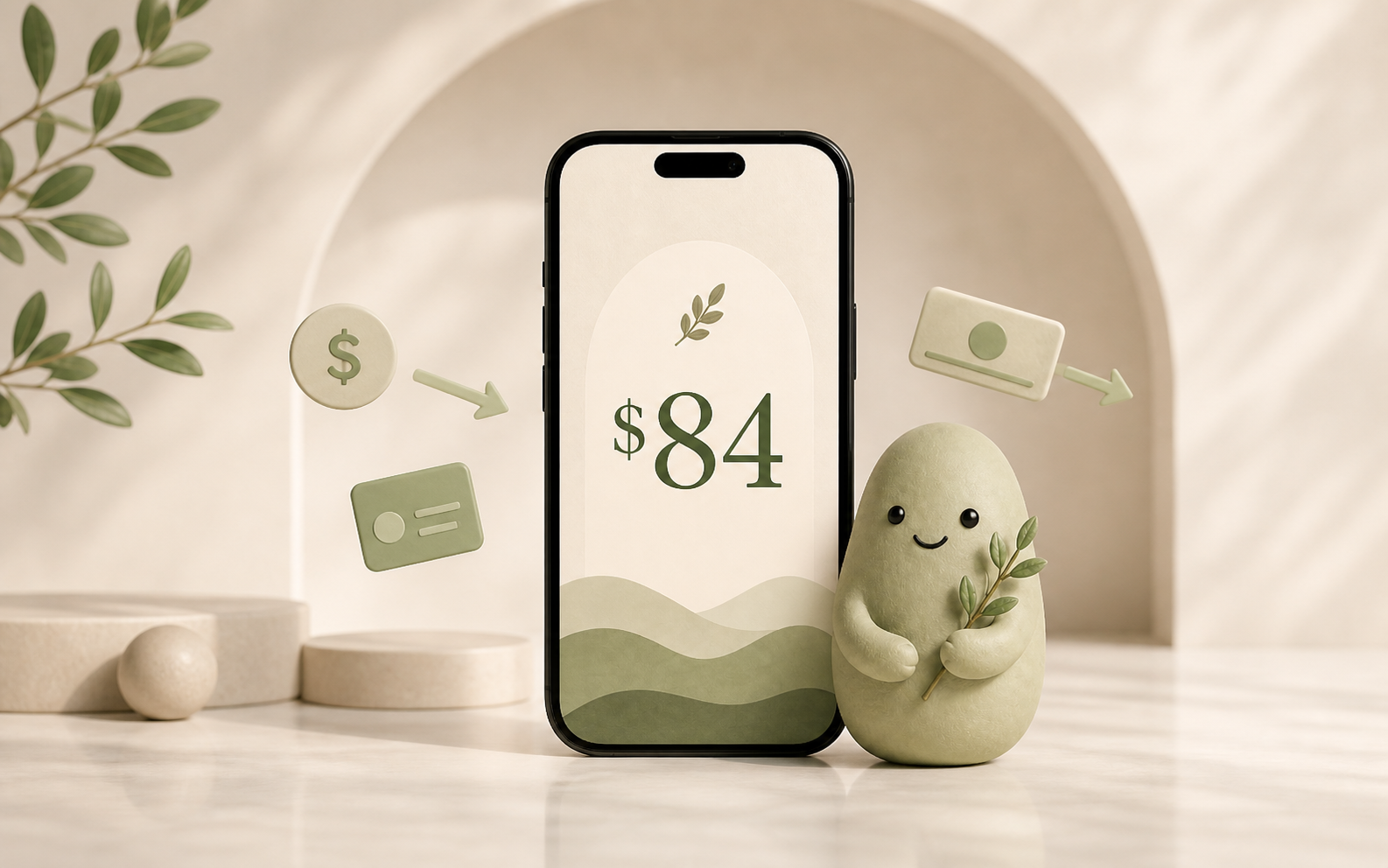
A daily money check means glancing at what you can afford today, not your full balance. Instead of subtracting bills mentally, you use one number that already accounts for them. Pip’s Spendable Cash Today answers “what’s available for today” so you can decide in seconds. Example:
How to estimate it
You don’t need a perfect forecast. Many people do a rough version in their head: take the bank balance, subtract any big bills still coming out, set aside money you don’t want to touch, and split what’s left across the days until you’re paid again. In more formal terms:
Estimated spendable today = usable cash – near‑term bills – protected savings – already‑committed card/debit spending – other known obligations
That “usable cash” isn’t the full ledger balance. It ignores pending transactions, holds on credit cards, or transfers that haven’t cleared. The idea is to focus on what’s truly free right now.
Once you know the leftover amount, divide it by the number of days until your next main deposit. That daily figure becomes your quick decision anchor, the number you check before an unplanned coffee, lunch, online purchase, or small treat.
Keep in mind that life doesn’t fit neat math. Occasional larger bills, timing mismatches, or weekends can shift the picture. That’s why the estimate is a guide, not a rule.
What can make this estimate wrong
Even a careful mental estimate can miss things. Common reasons:
- Pending card charges that haven’t hit your bank balance yet.
- Delayed or missing transactions if a connection is stale.
- Refunds, reversals, or disputes that temporarily distort the balance.
- Forgotten subscriptions or auto‑payments that sneak up.
- Timing misalignment: the estimate’s daily split assumes a stable flow, but a large expense on day one changes everything.
Because the estimate lives in your head, human biases creep in: we round up the balance, forget a bill, or ignore that “one‑off” expense. A read‑only tool that pulls live transaction data can reduce those blind spots.
How Pip handles it
Pip turns the daily money check into a single, automatically updated number called Spendable Cash Today. It connects to your checking account with read‑only access; Pip does not move money and does not store bank usernames or passwords. It simply reads your transaction activity and upcoming bill clues to calculate what’s truly available for today.
Unlike a bank balance (which shows everything you own, ignoring what’s already spoken for), Pip’s number subtracts estimated near‑term bills, flags low balances early, and helps you decide whether to spend or pause, without categories, spreadsheets, or shame.
Because Pip is a decision‑support signal, it is not financial advice. The number says “here’s the room you likely have” rather than “you must spend less.” It’s built for people who want a pressure‑free check before a purchase, not another full‑blown budget.
Read more about what Spendable Cash Today is and why a bank balance can mislead you.
FAQ
What exactly is a daily money check before spending?
It’s a fast glance that answers “can I afford this right now?” without opening a budgeting app, running mental math, or scrolling through transactions. It focuses on today’s available room, not your total net worth.
How is Pip’s daily number different from my bank balance?
Your bank balance shows the total cash that exists, but it doesn’t tell you what’s already spoken for (bills, card payments due, savings you want to protect). Pip’s number starts there and subtracts the upcoming commitments it can detect, giving you a real‑time daily signal. Learn why that matters.
Does Pip need me to track every purchase?
No. Pip uses read‑only transaction data and doesn’t ask you to log, sort, or categorize anything. You just check the number. It’s like glancing at a fuel gauge, not filling out a mileage log.
Can I trust the number if my bills come at different times?
Yes: because the daily number accounts for near‑term bill estimates to the extent transactions are visible. If a bill hasn’t appeared yet, the number may look higher for a day, but the algorithm rebalances as new information flows in. It’s meant to be updated daily, so you’re always working with the latest picture.
Is Pip a budgeting app?
No. It’s a daily spending companion for people who find traditional budgeting exhausting. You get one number, refreshed each day, with no categories to maintain and no guilt when you spend.
Source notes
- Pip uses a read-only account connection, does not move money, does not store bank usernames or passwords, and is not financial advice. Consumer‑habit research consistently shows that a quick, frictionless check before spending, like checking a single number, can gently redirect daily financial choices more effectively than complex budgets. Pip’s design draws on that principle, offering a low‑pressure signal instead of a rulebook. For more on how the number is built and kept secure, see How the number works and our Security page.