Quick answer
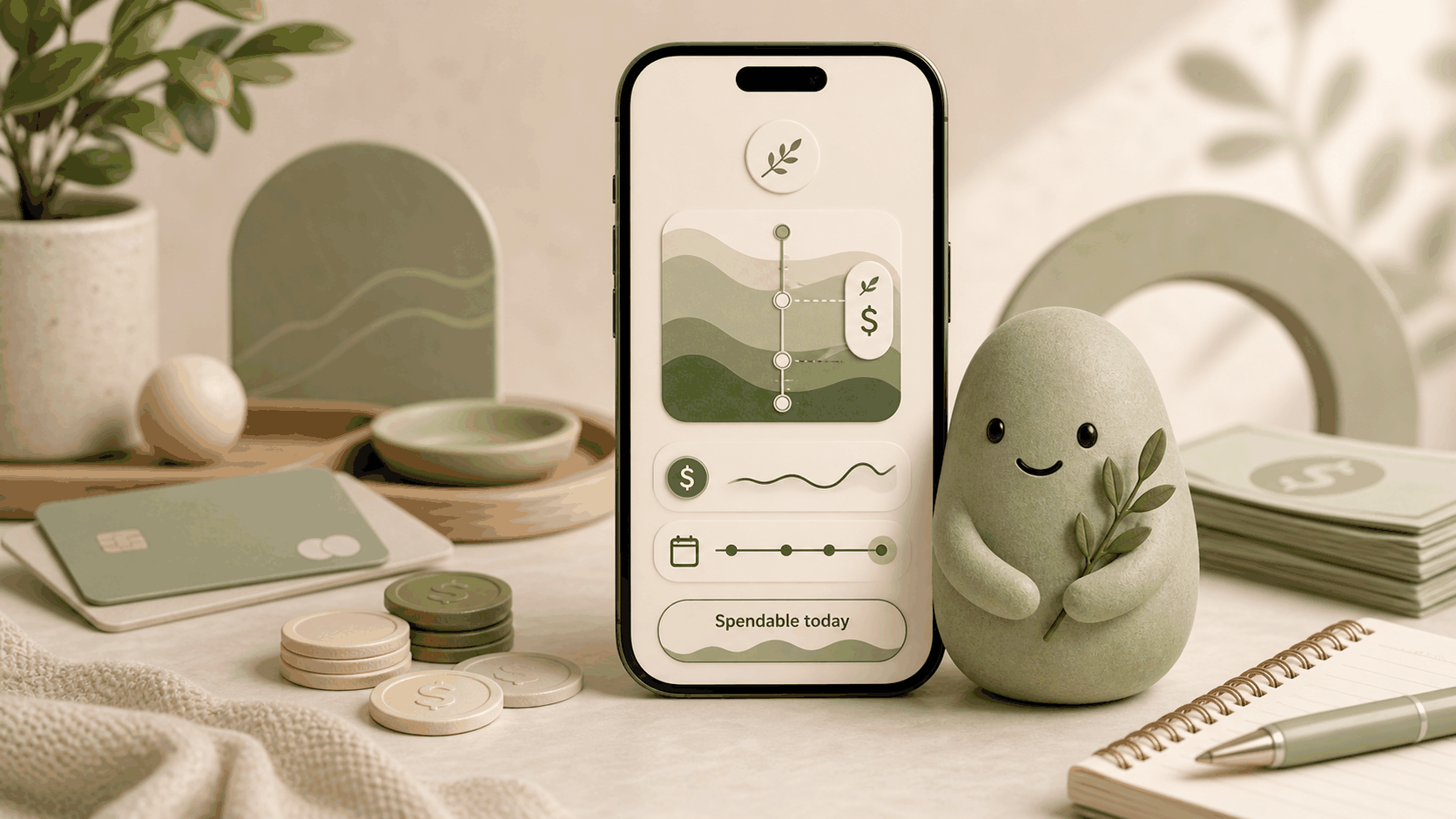
A category-free spending tracker shows one number: what you can spend today after bills. Pip calculates Spendable Cash Today, the amount available for today after subtracting near-term obligations from your bank balance. No categories, no budgets, no spreadsheets. Check once and know what’s available for today before you spend.
How to estimate it
The core formula is simple:
Estimated spendable today = usable cash - near-term bills - protected savings - already-committed card spending - other known obligations
Here’s how that translates to a real day:
1. Usable cash: Your bank balance minus any pending transactions. If a deposit hasn’t posted, the balance might look larger than what’s really settled. So usable cash is what’s actually spendable right now. 2. Near-term bills: Payments due in the next few days-rent, car payment, phone bill, etc. Missing one often means a late fee, so these come first. 3. Protected savings: Money you’ve set aside and don’t plan to touch for daily spending, even if it sits in the same account. Treat it as off-limits. 4. Already-committed card spending: Debit or credit purchases you made but haven’t cleared yet. A debit from yesterday that’s still processing is money that’s already spent. 5. Other known obligations: Transfers or payments you scheduled but haven’t posted. If you sent a friend $50 yesterday and it’s still pending, that’s committed.
Here’s a realistic example of the calculation:
Subtracting those obligations leaves roughly $650 available for today. Pip runs this calculation automatically using your connected accounts, so you only see the single Spendable Cash Today number. Even a debit that hasn’t cleared yet gets factored in. The number reflects reality, not just your ledger balance.
You can rough-estimate this by looking at your bank balance and upcoming bill dates, but doing that every day is tedious. Pip does exactly this calculation for you, using your connected accounts and recurring transaction patterns. The output is one daily number that’s easier to act on than a list of categories.
What can make this estimate wrong
A daily spending number is always an estimate, not a certainty. These factors can make it less reliable:
- Missing accounts. If you don’t connect all your spending and bill-pay accounts, the estimate won’t include money that’s elsewhere.
- Stale bank connections. A temporary feed disruption can lag a day, so the figure may be based on yesterday’s balance.
- Pending transactions. Payments that haven’t posted can show a higher number until they’re reflected. If a bill payment clears slower than usual, the number might look higher briefly.
- Unexpected bills. One-off charges or subscriptions you forgot about can appear after the number was calculated.
- Refunds and reversals. Money returned from returns or disputes often posts late, making your available cash look temporarily higher.
Because of these factors, the number is decision-support, not financial advice. Pip is a read-only companion that helps you spot what’s likely available. It doesn’t guarantee every dollar is spendable right now. Treat it as a quick reference, not an exact balance sheet.
How Pip handles it
Pip links to your bank with read-only access. It does not move money and does not store bank usernames or passwords. Each day it fetches your balances and recent transactions, then recalculates one straightforward spending signal: Spendable Cash Today.
Instead of requiring categories, Pip automatically subtracts near-term obligations and committed spending from your cash balance. You get one number you can check in seconds, on a lock-screen widget or inside the app. No budget to build, no purchases to tag, and no guilt if you need to spend a bit more. Pip updates the number and you decide. The lock-screen widget refreshes each morning so you have a fresh number before your day starts.
That’s how Pip works as a category-free daily tracker. Check it in the morning, before lunch, or before a spontaneous purchase. It’s not a full budgeting system. It’s a way to know what’s available for today without spreadsheets or guilt. Learn more about how the number works and why read-only security matters.
FAQ
Do I need to categorize any spending to use Pip?
No. Pip is designed for people who skip categories. It gives you one Spendable Cash Today number that automatically accounts for upcoming bills and committed spending. No manual tagging required.
How often does the spending number update?
The number refreshes whenever new transaction data is detected, usually once per day. If you check in the morning, you’ll see a number based on the most recent bank activity and bill timing.
Is Pip a budgeting app or just a spending tracker?
Pip is a daily spending signal, not a traditional budget. You don’t set category limits or log every purchase. It gives you one number that helps you decide whether there’s room to spend today, no setup required.
Can I see past daily numbers?
Pip focuses on today’s spendable number because the point is to make a quick decision. However, you can look back at recent days inside the app to see how your number changed. There’s no historical reporting dashboard, by design.
Source notes
- Pip uses a read-only account connection, does not move money, does not store bank usernames or passwords, and is not financial advice. This article covers Pip’s product behavior and common questions about category-free daily tracking. No categories are used in the calculation. Only your balance and upcoming payments influence the number. Pip is a read-only money companion. It does not move money and is not financial advice. For more background on the daily number concept, see What is Spendable Cash Today?.